

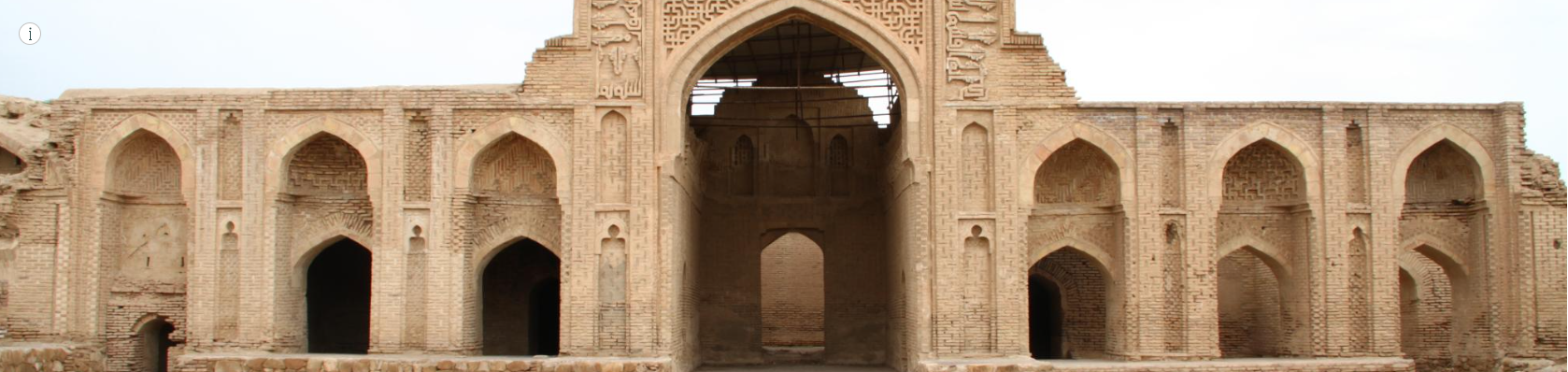
Khorasan Caravanserais
Roadside buildings in the Khorasan region of Iran
Bijan Rouhani and Hamed Rahnama
July 14, 2022
Khorasan is an ancient region on the Iranian plateau that includes portions of northeastern modern Iran, parts of modern Afghanistan, and parts of southern Central Asia. Khorasan has long served as a crossroad for vital East-West trading routes. Because trade and pilgrimage routes are so important in Khorasan, multiple caravanserais have been built there, particularly after the 12th century AD. Caravanserais are roadside structures where caravans, merchants, pilgrims, and visitors can stay temporarily. An extensive network of caravanserais and related structures connected North Africa with Arabia, Anatolia, and India via Iran and Afghanistan (Kleiss, 2012).
Caravanserai (also caravansary, caravansarai) in Persian means lodging for caravans, from caravan and Sarai (saray- “house” in Persian). It is also called Khan. In Arabic, it is mainly called Rabat (also Robat or Ribat).
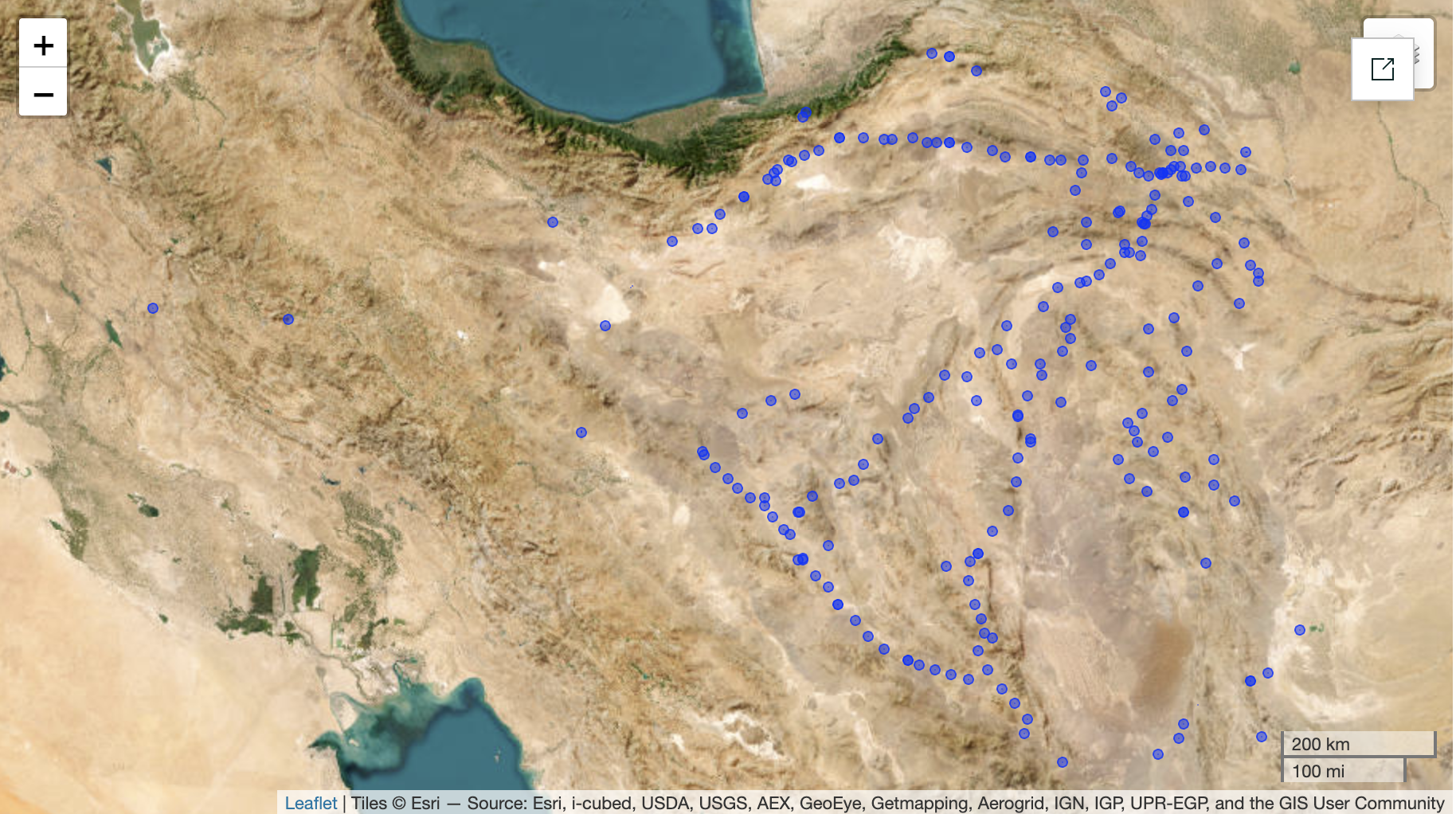
Presentation of ongoing work on Caravanserais with the EAMENA database.
To access the caravanserais dataset in the EAMENA Database at the University of Oxford, you need to register here.
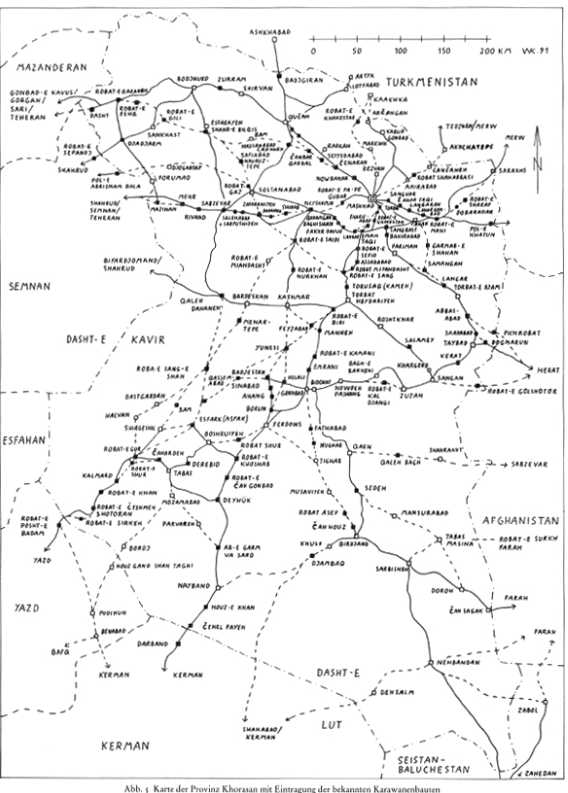
Map of the caravanserias in Khorasan province of Iran. Source: Kleiss, Wolfram. Karawanenbauten in Iran. Berlin: D. Reimer, 1996. Print. Materialien Zur Iranischen Archäologie.
There is evidence of pre-Islamic caravanserais in Iran from the ninth and eighth centuries B.C.E. and from the Achaemenid period (r. c. 550–330 B.C.E.) (Kleiss, 2012), but the caravanserais network was mainly developed in the Islamic period.
Explore some of these caravanserais on the tour below: